
If your website, web application, or API relies on NGINX—the open-source web server and reverse proxy powering a massive portion of the modern internet—immediate attention is required.
On November 18, 2026, F5 and security researchers publicly disclosed a cluster of critical security vulnerabilities in NGINX, collectively tracked as NGINX2Root. Because these flaws reside upstream in the core NGINX software itself rather than in your custom application code, servers globally are potentially exposed.
At Waiktech, keeping your digital infrastructure resilient is our top priority. Here is a breakdown of what happened, why it matters, and the exact steps required to secure your servers.
What Was the Issue?
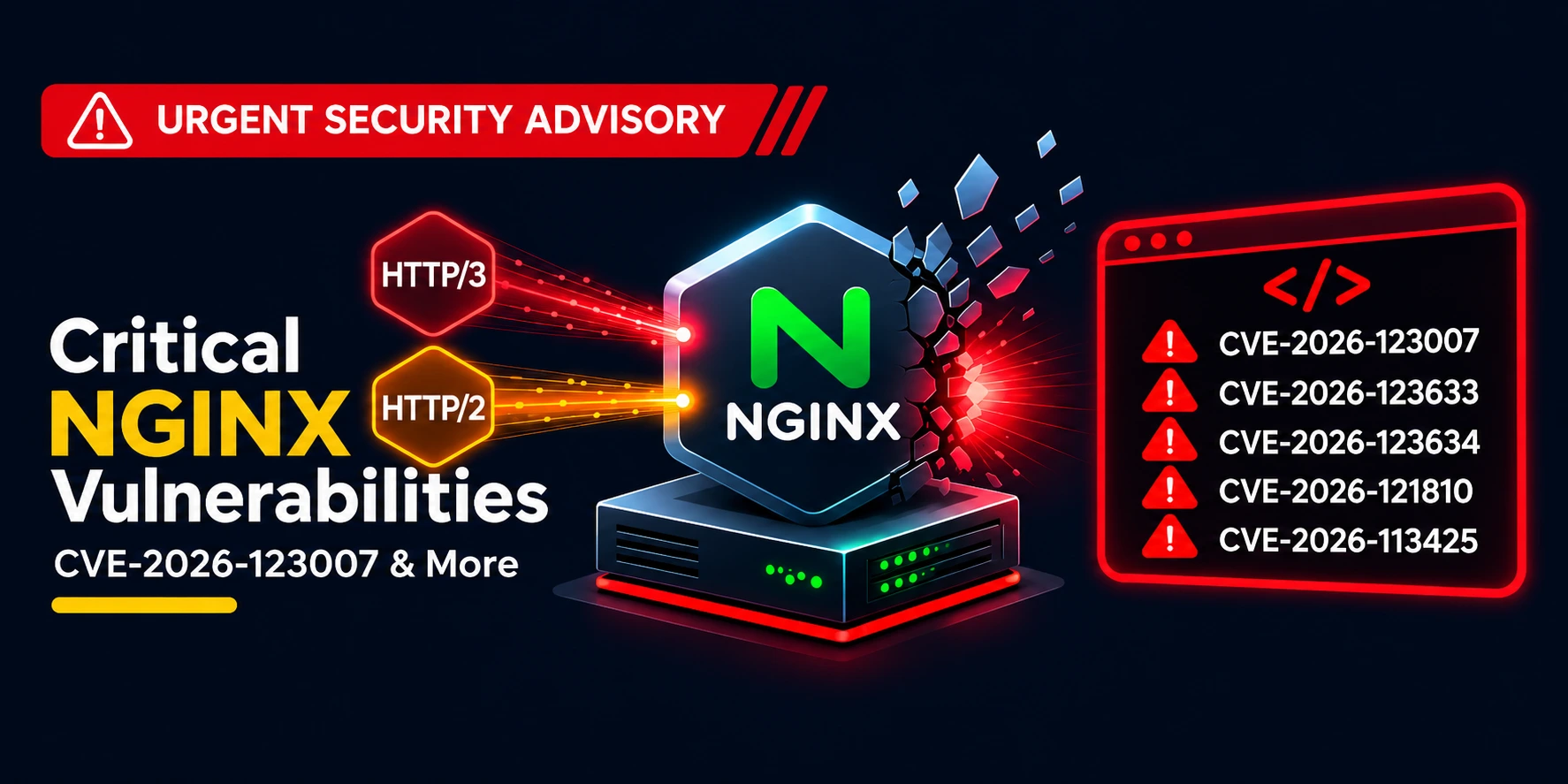
The disclosure centers around five critical remote code execution (RCE) flaws (each carrying a severe CVSS v4.0 score of 9.2) alongside several secondary issues. The primary vulnerabilities affecting standard web deployments include:
- CVE-2026-123007 (HTTP/2 Flow-Control Memory Corruption): A flaw in how NGINX handles HTTP/2 flow-control accounting that can trigger memory corruption. Because it only requires HTTP/2 to be enabled, this is considered the most urgent risk.
- CVE-2026-123633 (HTTP/2 Connection Lifecycle Flaw): A bug that leaves active HTTP/2 connections improperly marked as reusable, leading to a use-after-free memory condition under heavy connection pressure.
- CVE-2026-123634 (DNS Resolver Flaw): A vulnerability affecting reverse proxy configurations where the proxied server name uses variables alongside mirror or Server Side Includes (SSI) subrequests.
- Additional Disclosed Flaws: The release also patches critical issues in HTTP/3 QUIC listeners (CVE-2026-121810) and mail proxy modules (CVE-2026-113425).
Why This Vulnerability Is Critical
Under vulnerable configurations—particularly servers utilizing HTTP/2 or reverse proxying—an unauthenticated remote attacker can send specially crafted web traffic to your server. Depending on the attack vector, this can result in:
- Denial of Service (DoS): Crashing NGINX worker processes and taking websites or APIs offline.
- Remote Code Execution (RCE): Executing arbitrary code within the NGINX worker process.
- Data & Credential Exposure: Because NGINX often sits at the perimeter decrypting TLS traffic before passing it to backend services, a compromised worker could allow attackers to intercept session tokens, passwords, or internal API headers.
While there are no confirmed reports of active exploitation in the wild yet, security researchers have already published proof-of-concept (PoC) exploit code. Historically, public PoCs lead to automated scanning and exploitation within days, making rapid patching essential.
Affected Versions & Official Patches
Upstream patches are available across both NGINX Open Source and major Linux distributions:
| Software / Distribution | Vulnerable Versions | Fixed / Patched Versions |
| NGINX Open Source (Stable) | Prior to 1.30.7 | 1.30.7 |
| NGINX Open Source (Mainline) | Prior to 1.31.9 | 1.31.9 |
| NGINX Plus | 37.x builds prior to 37.3.0.1 | 37.3.0.1 (or branch equivalent) |
| Ubuntu Linux | 16.04 LTS through 26.10 | Patched via USN-9159-1 |
Action Plan: How to Protect Your Infrastructure
If your team manages your own cloud servers, VPS instances, or Kubernetes ingress controllers, take the following steps immediately:
- Apply Official Security Updates: Update your NGINX packages via your OS package manager (e.g., apt update && apt upgrade on Ubuntu/Debian systems covered under USN-9159-1) or pull updated container images.
- Restart—Do Not Just Reload—NGINX: Running nginx -s reload only reloads configuration files while keeping the vulnerable binary in memory. You must perform a full service restart (systemctl restart nginx) so the patched binary takes over.
- Temporary Workaround (If You Cannot Patch Immediately): If your deployment pipeline prevents an immediate upgrade, temporarily disable HTTP/2 (http2 off;) and HTTP/3 listeners on internet-facing NGINX servers to block the primary attack vectors until patching is complete.
- Audit Down-Stream Dependencies: If you use NGINX-derived tools like OpenResty or Kubernetes NGINX Ingress Controllers, verify that your upstream container tags include the November 18 security fixes.
Need Help Securing Your Servers?
Keeping up with zero-day advisories and emergency server patching can pull your team away from core business operations. Waiktech actively monitors infrastructure vulnerabilities and manages server security, patching, and uptime for our clients.
Not sure if your website or cloud environment is exposed? Contact the Waiktech team today for a rapid security audit and patch verification.